John Muir High School Early College Magnet
1905 Lincoln Ave, Pasadena, CA 91103
John Muir High School Early College Magnet is part of the Pasadena Unified School District. The campus is adjacent to the I-210 freeway, less than 2 miles south of the San Gabriel Mountains.
The Emerald Necklace John Muir High School Campus Natural Infrastructure Improvement Project significantly enhanced tree canopy, biodiversity, and outdoor common spaces on campus, transforming the school into a green, cool hub for the surrounding community. The project’s natural infrastructure addresses air quality, improves drainage, responds to vector control issues, counteracts heat islands, and creates a sense of place by enhancing urban forests and bringing nature to campus.
Urban Forest
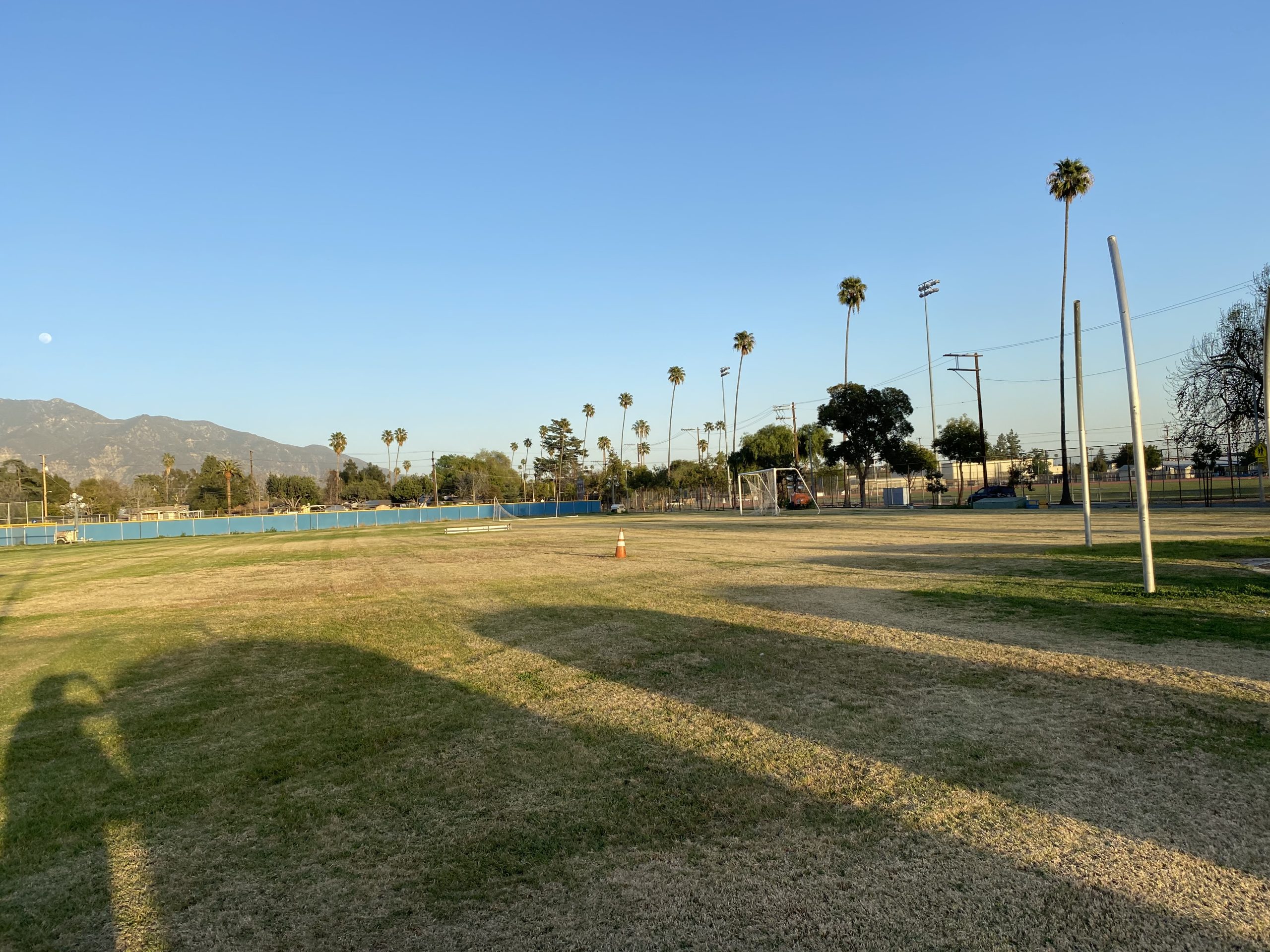
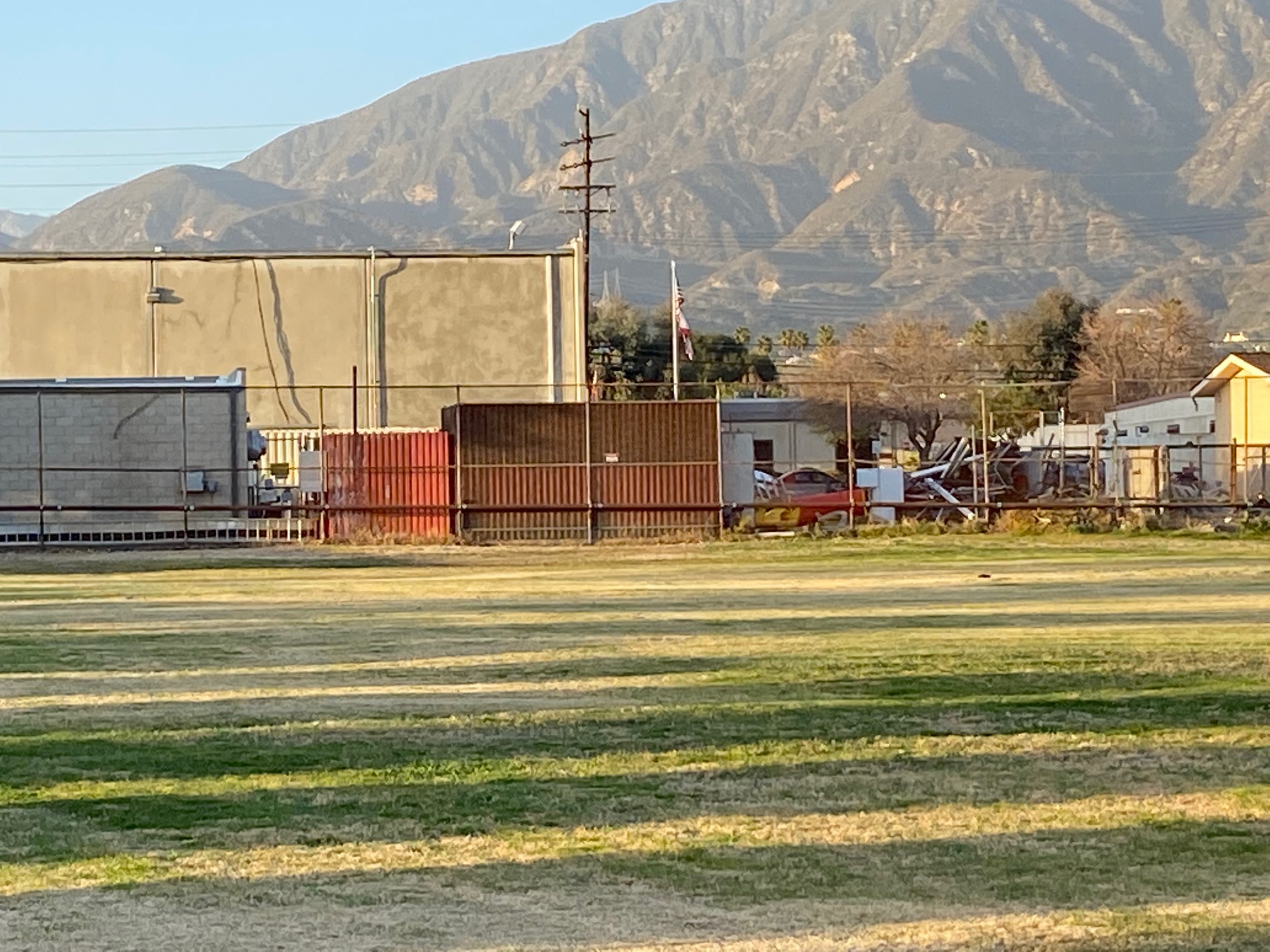
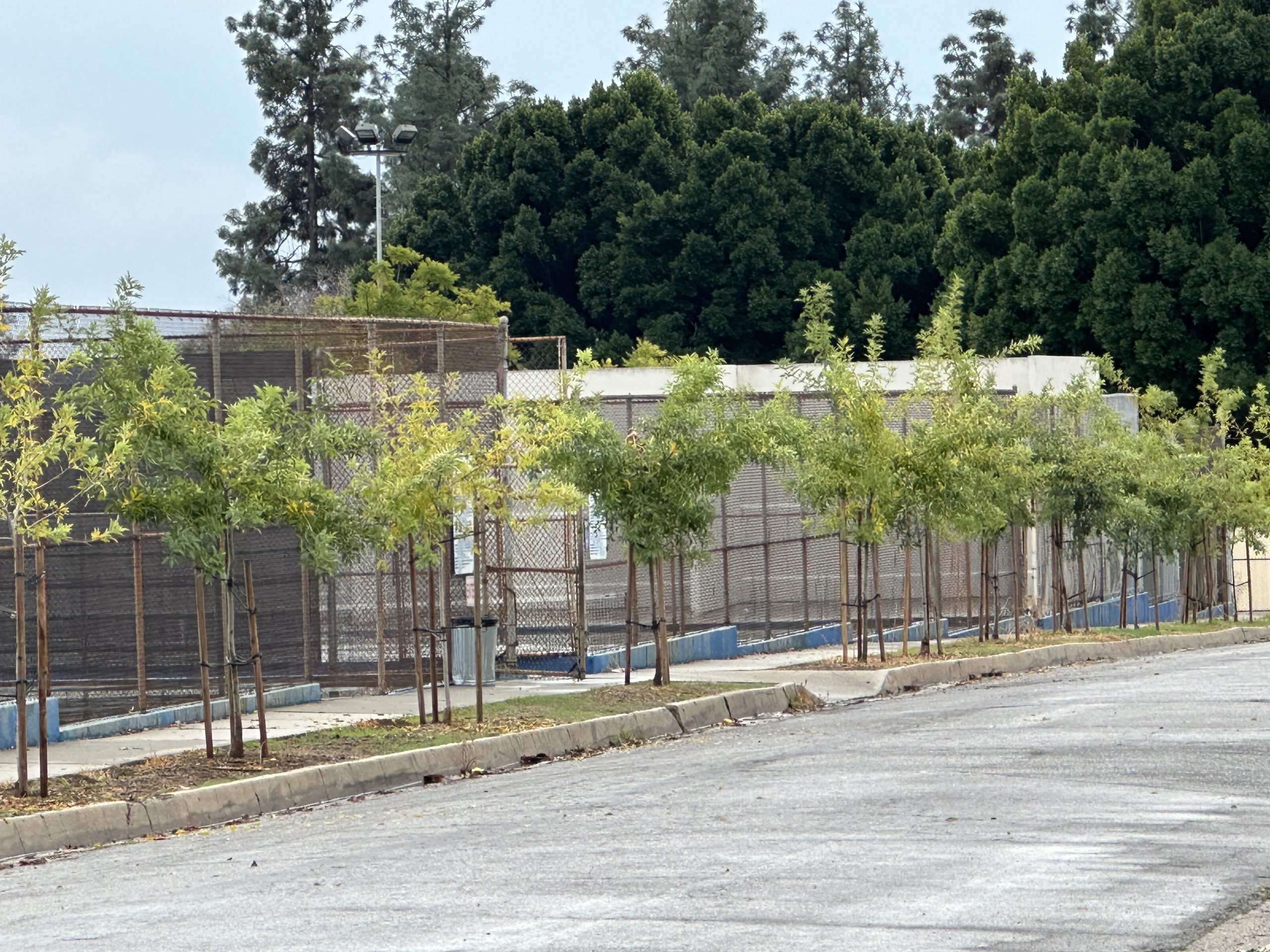
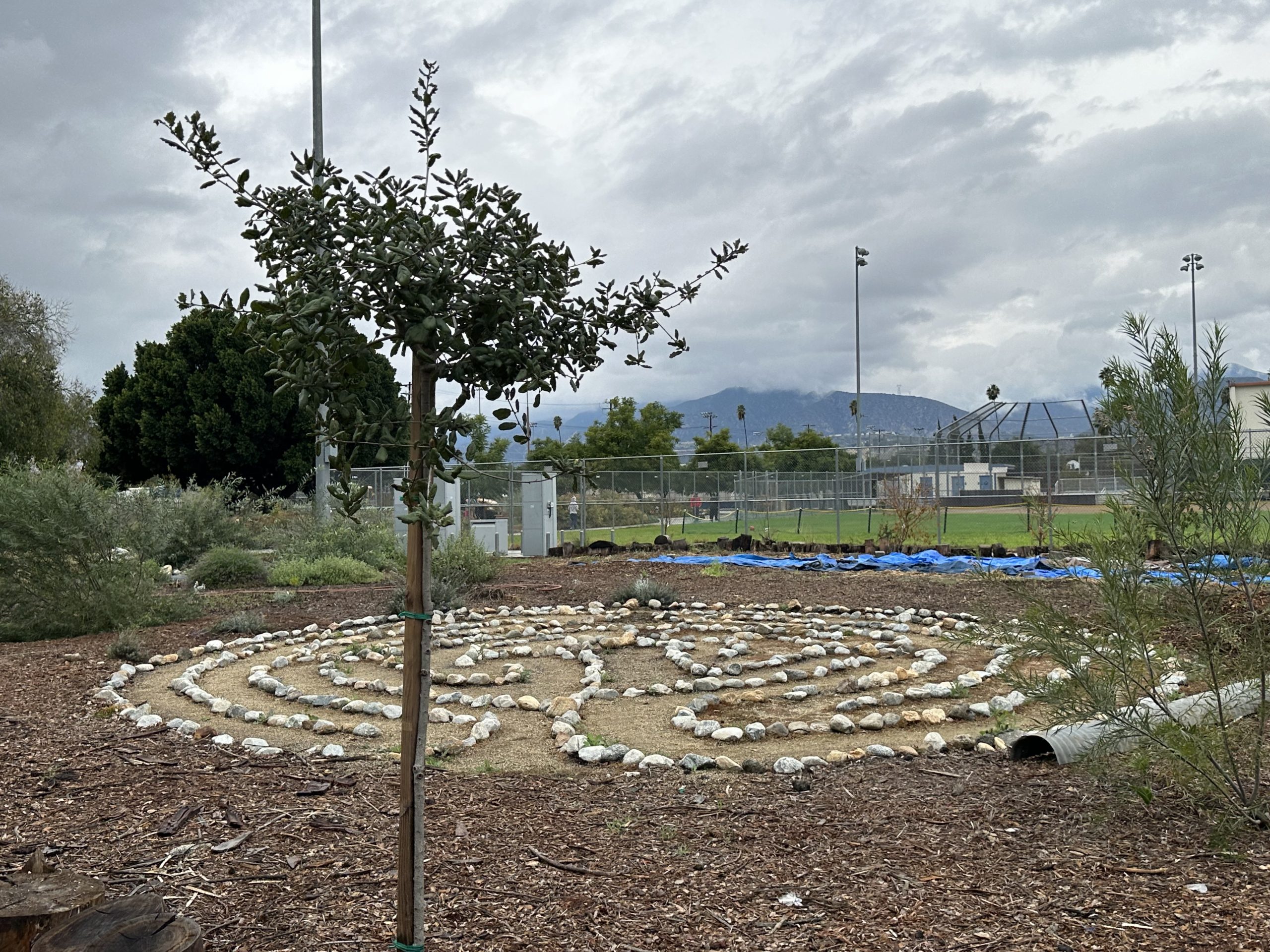
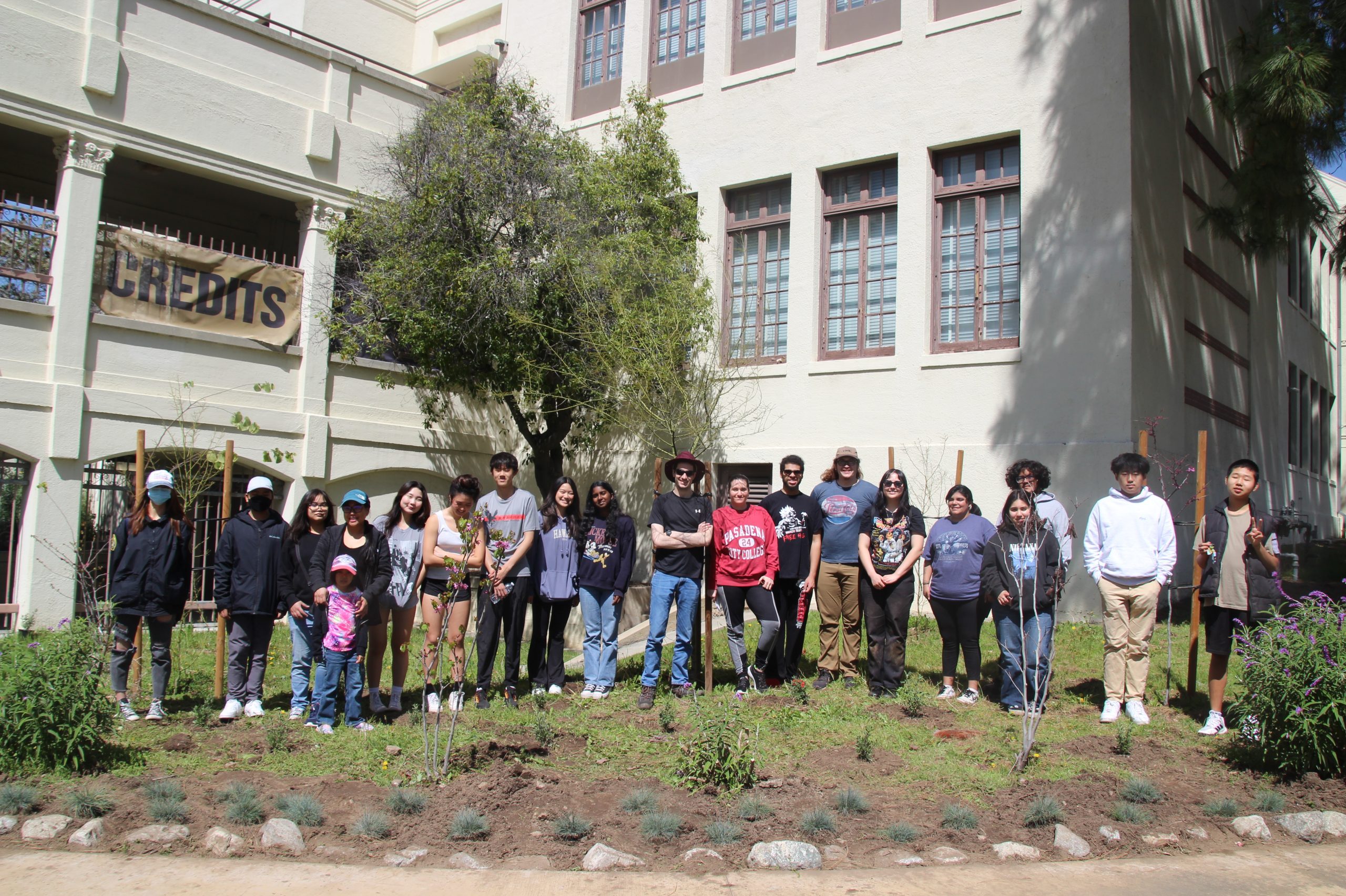
The project includes the removal of asphalt and water-intensive non-native grass and adding over 200 trees and 2,000 shrubs. Amigos’ shrub species palette has, since 2003, been based on input from Tongva Gabrieleno ethnobotanists to include plants with medicinal, spiritual, structural, and edible values to the traditional Native American Indigenous population of our area. We have selected native habitat plantings that thrive in Southern California’s hot, dry Mediterranean climate, considering factors such as pest resistance. The native gardens provides habitat for species like migratory and nesting birds and butterflies.
We have also conducted tree indexing activities on-site, taking measurements of vital metrics to input into our PlanIt Geo “Tree Plotter” database to monitor forest health. This allows for monitoring new plant growth, ensuring habitat success, and performing removal and replacement of any trees and shrubs that fail to thrive.
Connection to the Greater Watershed
We installed bioswales, rain gardens, and pervious walkways to address stormwater challenges. The stormwater infiltration elements use gravity for conveyance and trash capture, and in situ soil for treatment. Gravity collects stormwater and transports it to dry wells, where it is infiltrated into the soil. Pervious pavement is porous, functioning like traditional blacktop for pedestrian and vehicular traffic but allowing small water particles to filter through, sifting down through the pavement to infiltrate the soil and percolate into the groundwater system.
The campus watershed flows directly to the Arroyo Seco. Improving stormwater quality before it reaches the Arroyo improves the water quality in downstream communities. On average, this project captures and infiltrates 0.7 acre-feet of stormwater per year, removing 82% of pollutants from that water before it reaches the Arroyo and the communities downstream.
Community Outrech
Amigos has conducted outreach and greening work with the Pasadena Unified School District for many years. During this time, we have connected with parents, students, teachers, administrators, campus-based organizations, and local residents to outline and prioritize meaningful, multi-benefit enhancements with high community impact. We have been collaborating with local community-based organizations such as Outward Bound Adventures (OBA), housed on campus, to explore how natural infrastructure elements, including improved stormwater drainage, can better serve the school and the greater community.
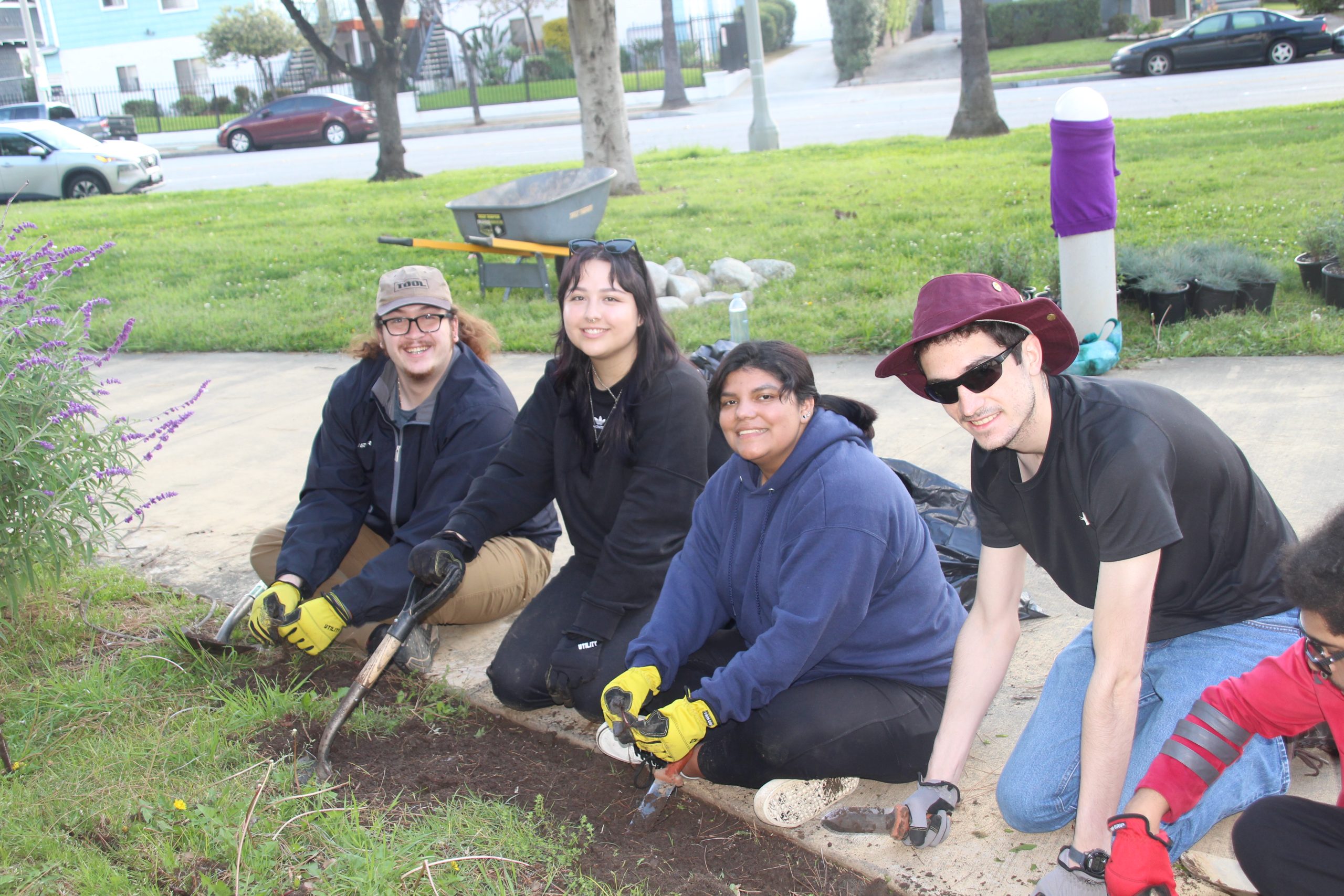
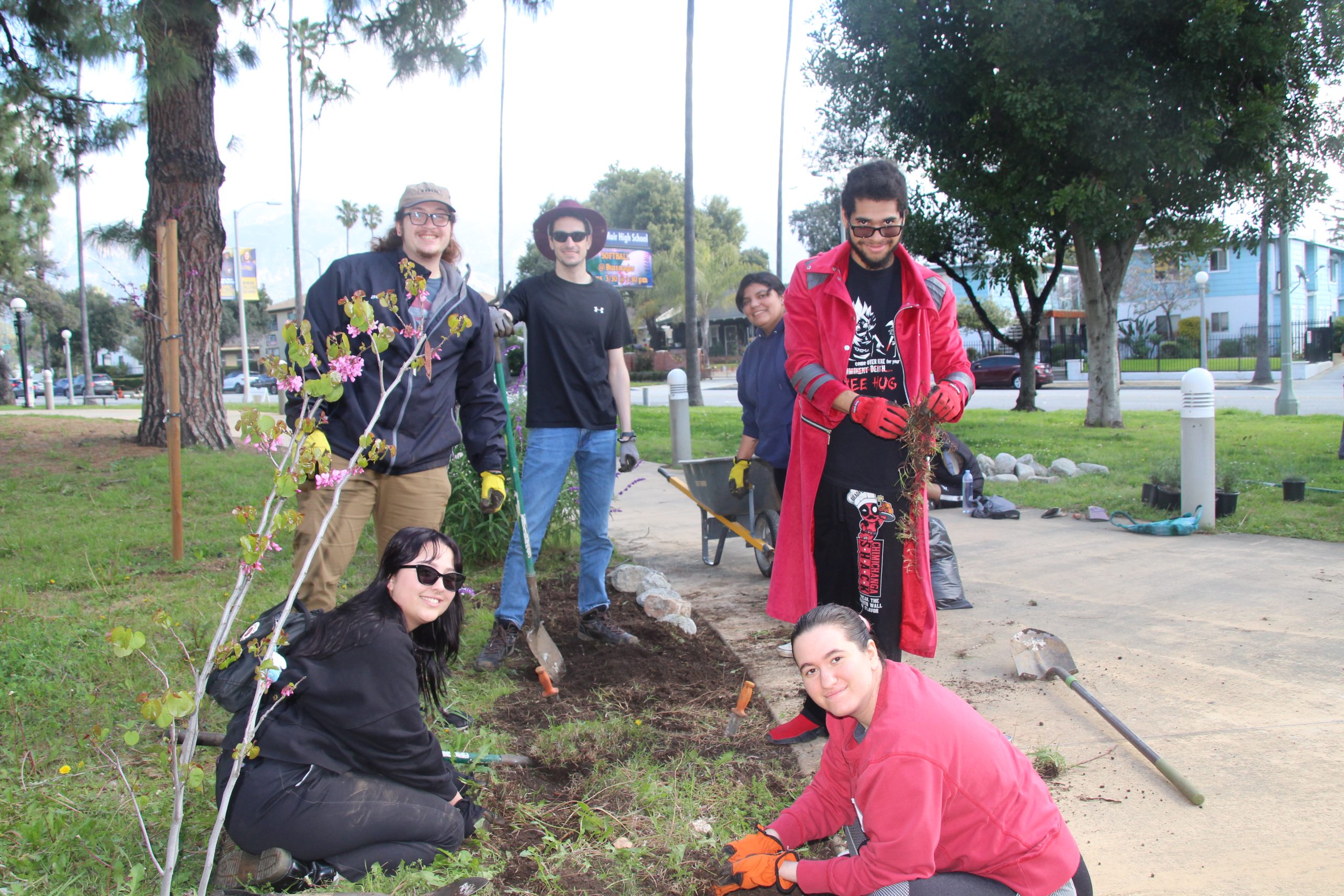
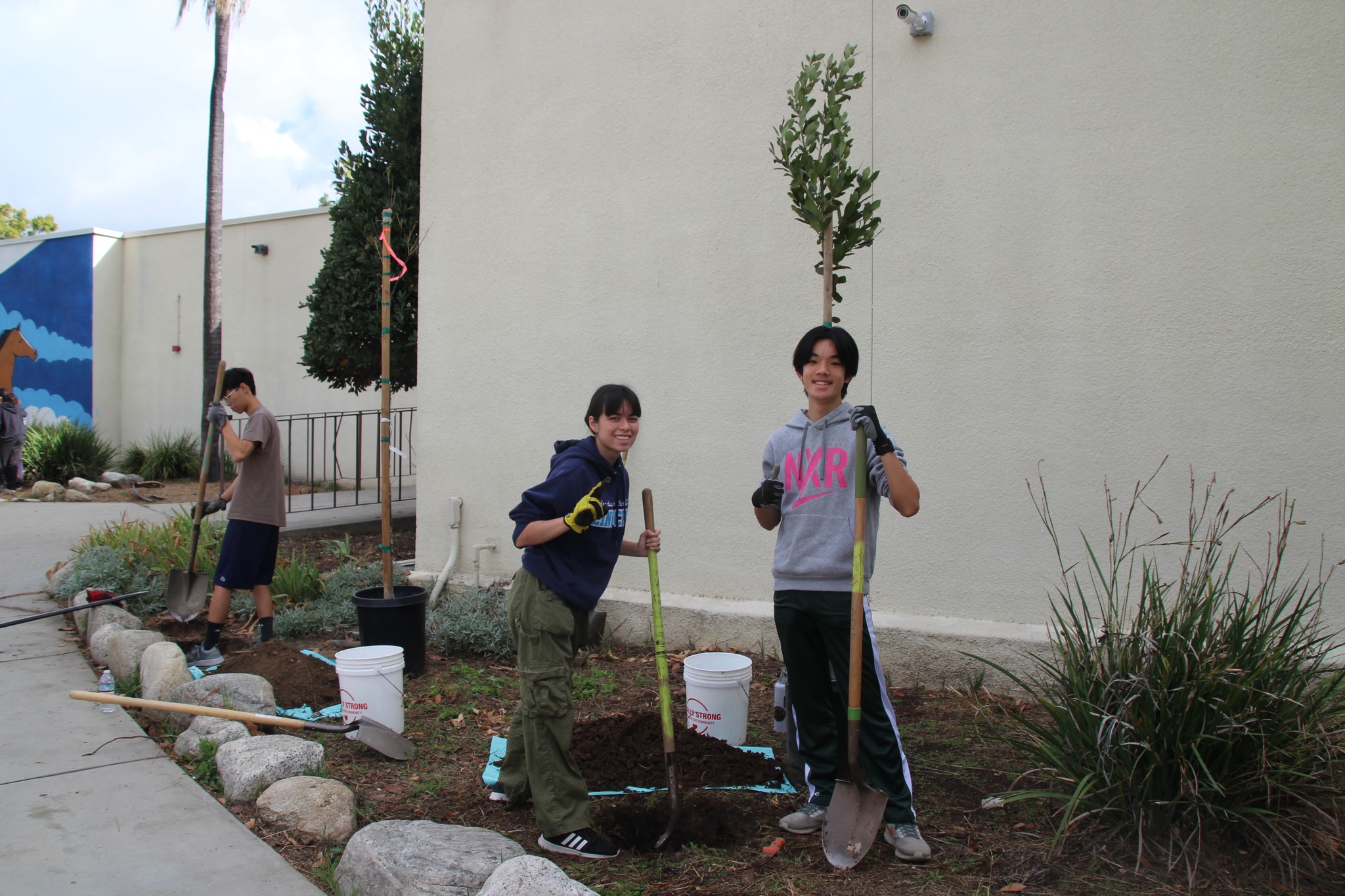
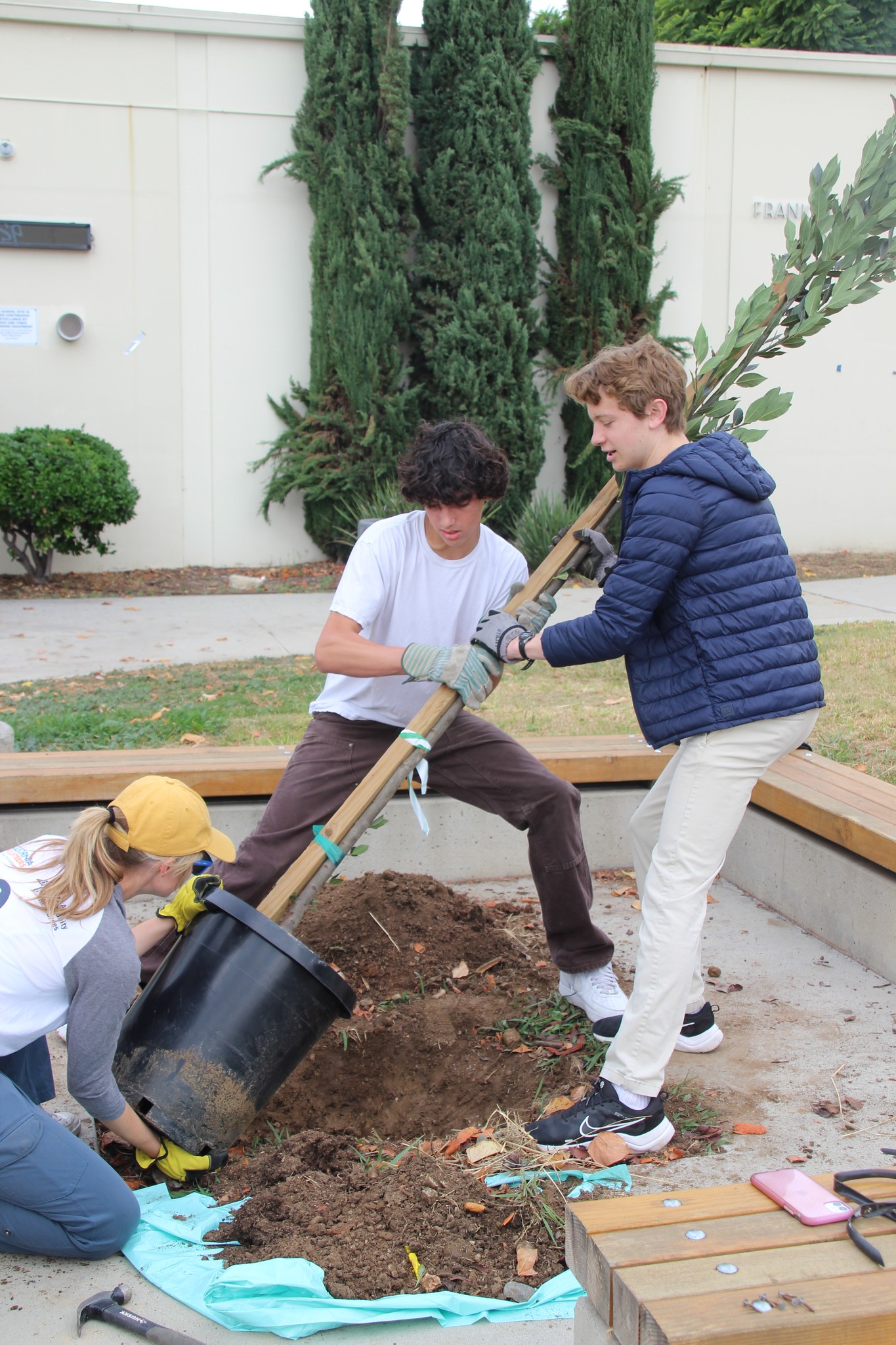
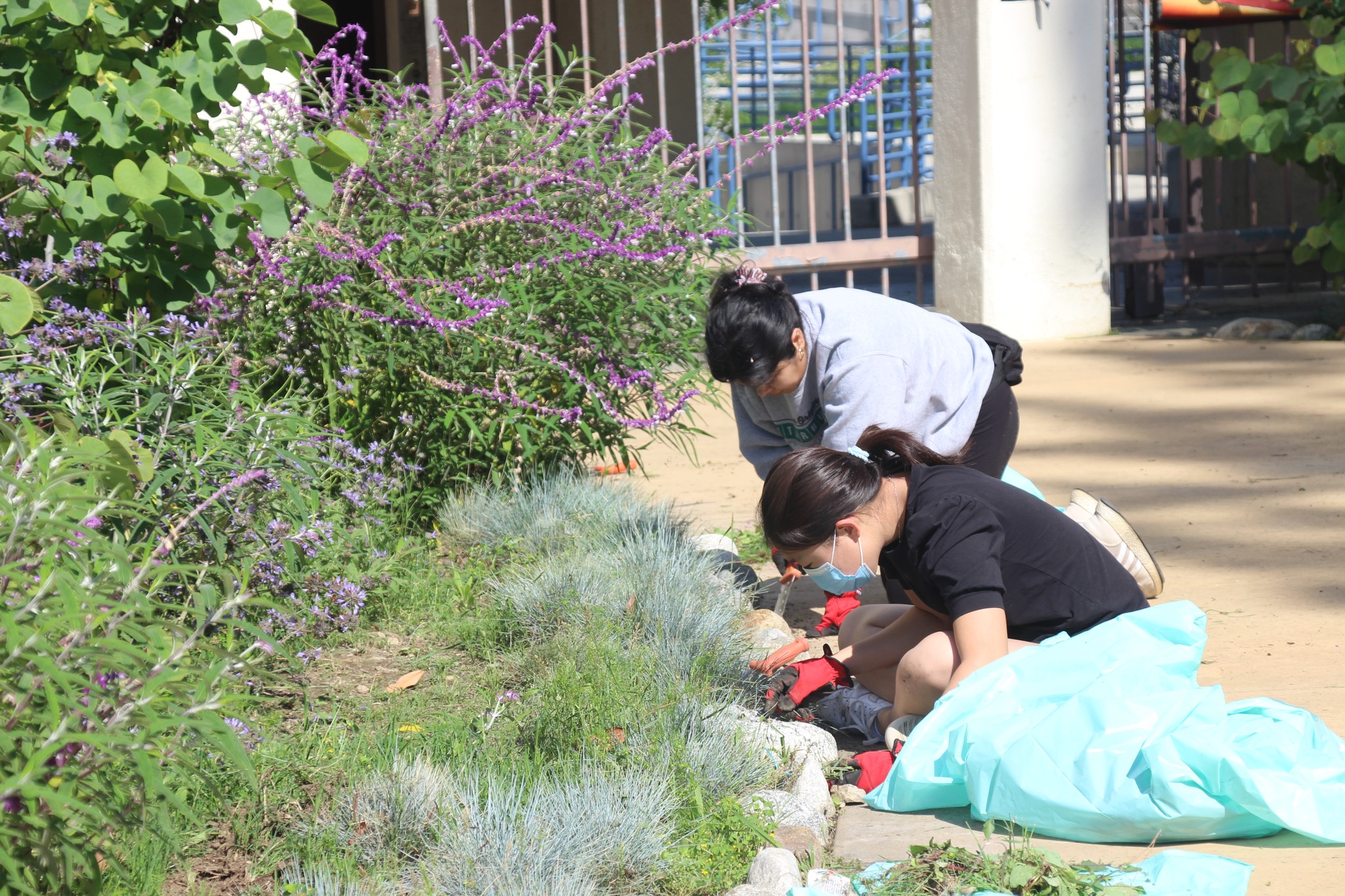
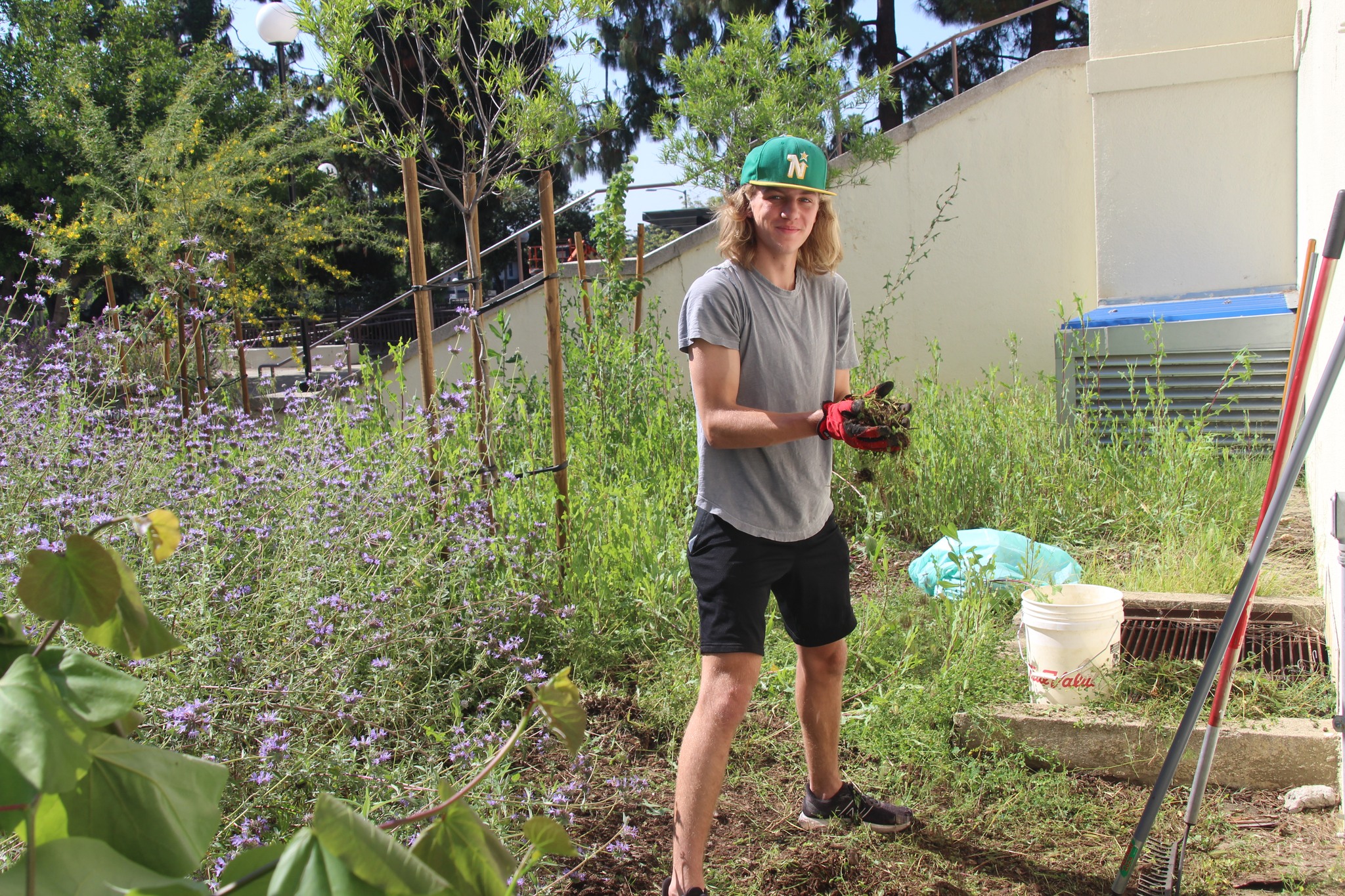
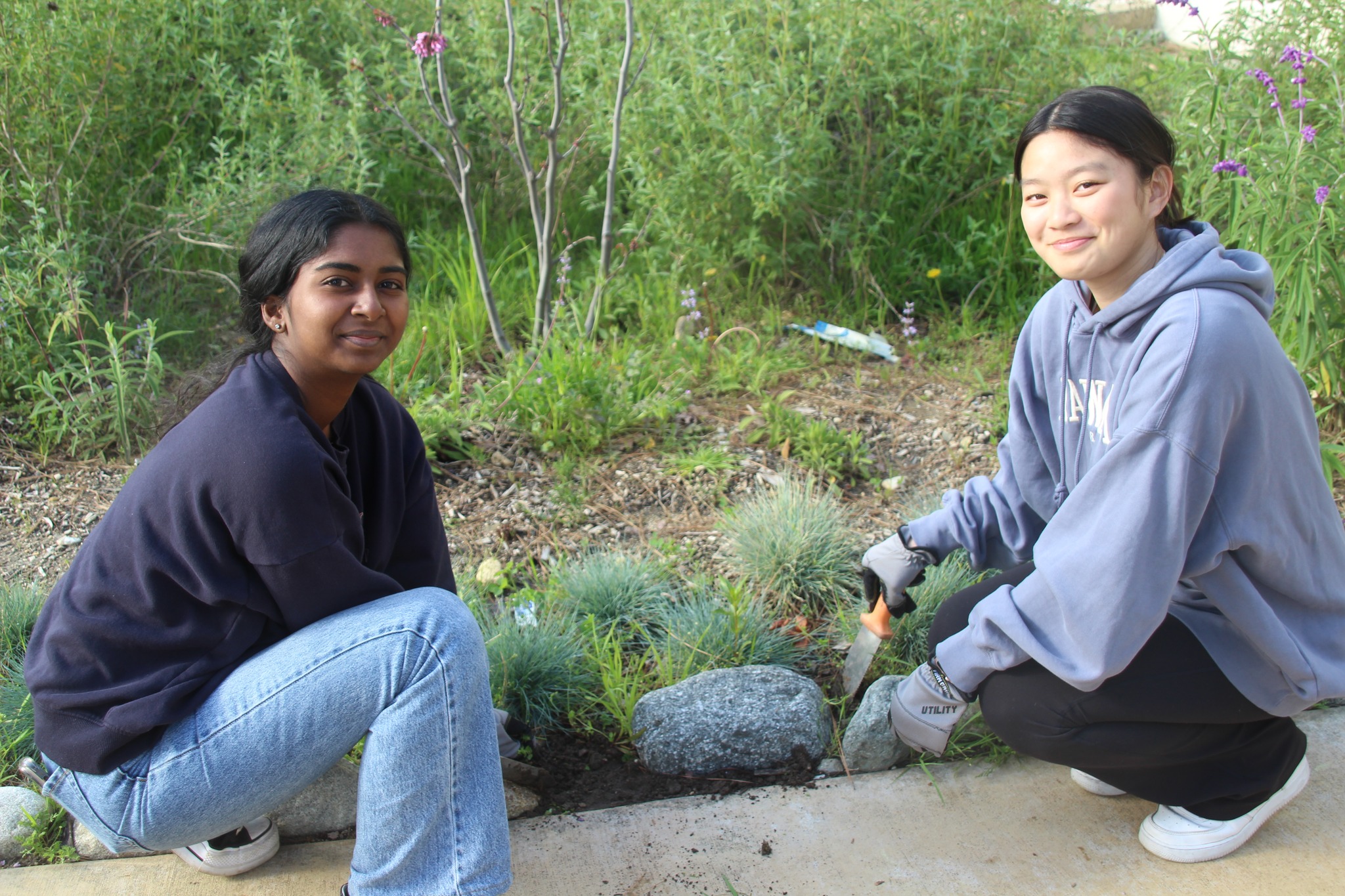
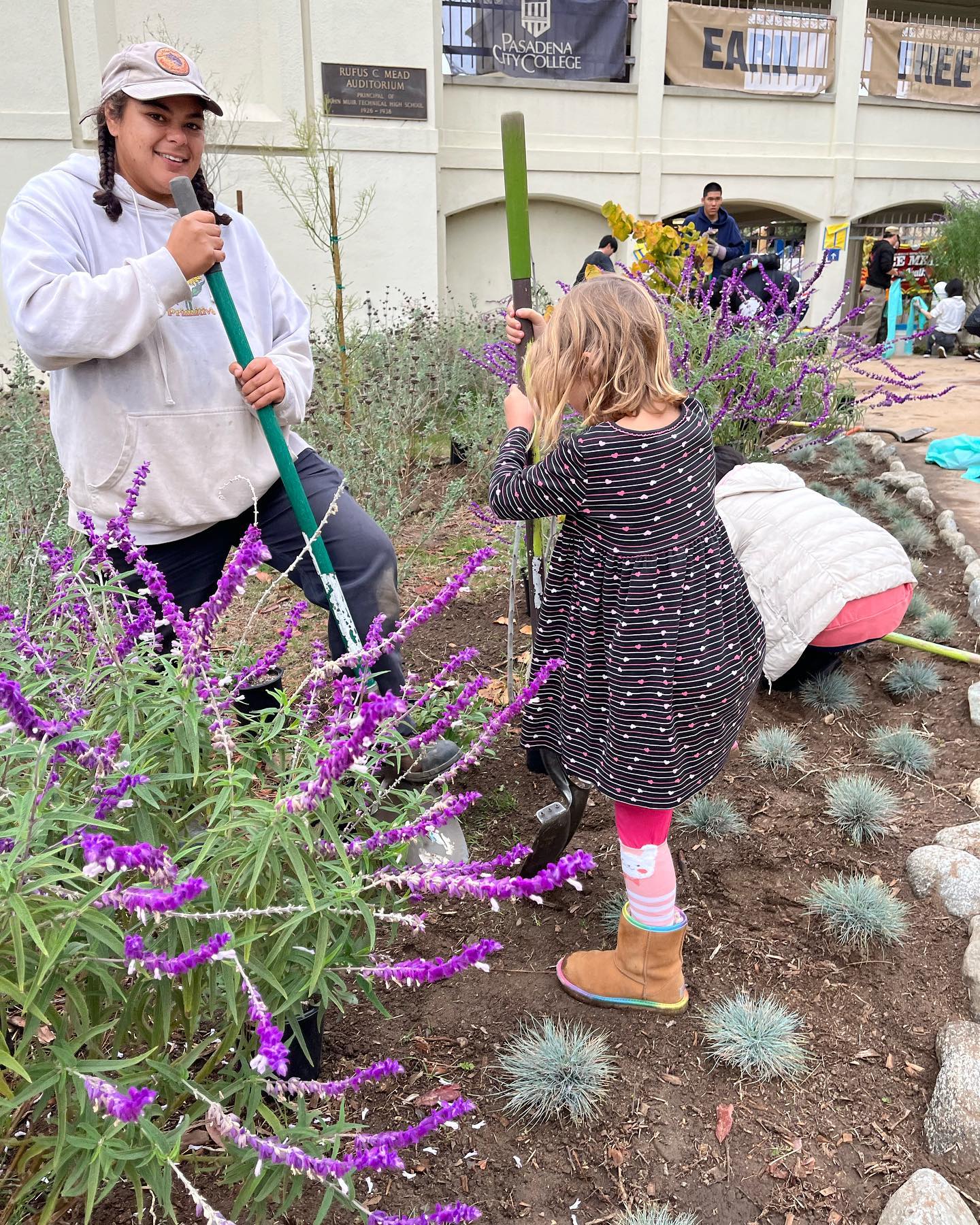
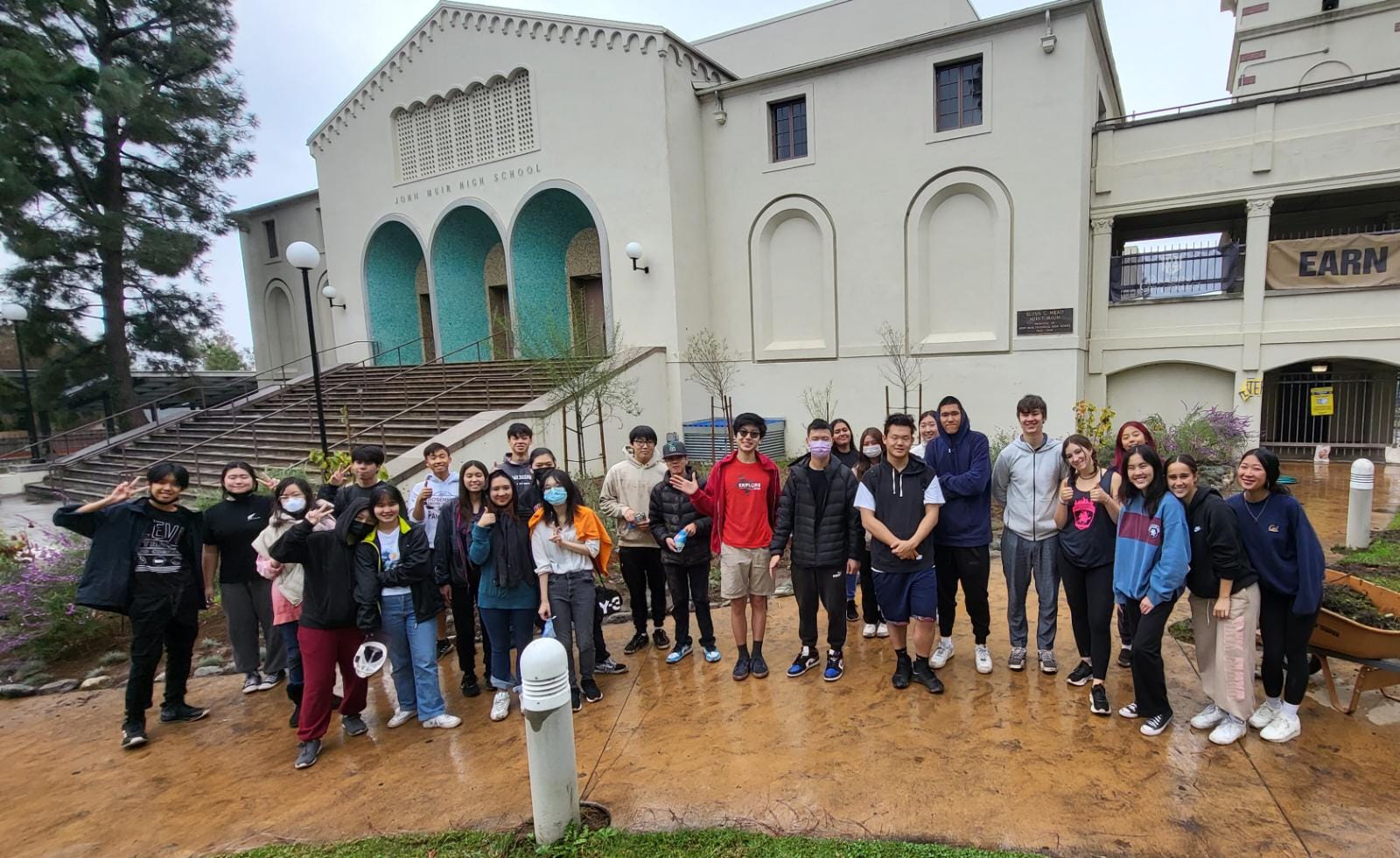
We hold weekend community stewardship events in different locations throughout the Emerald Necklace, inviting students, Conservation Corps members, and community stakeholders to aid in campus transformation. These events include activities such as planting and caring for native trees and shrubs across campus. Amigos fellows, volunteers, and trainees also help monitor the health of this urban forest by learning how to take measurements for the I-Tree database, monitor low-impact development permeable pavement, and learn about ground infiltration and varying campus temperatures.
Benefits to the Community
• Greenhouse gas emission reduction
• Public health benefits including lower asthma rates
• Pandemic/COVID safe outdoor learning spaces
• Improved air quality
• Heat island mitigation
• Health benefits including reduced asthma and cardiovascular disease
• Energy use reduction from building shade
• Community beautification
• Improved academic performance, physical fitness and mental health benefits trees and green school campuses provide
• Civic engagement and job training
• Improving biodiversity and providing pollinator habitat for birds and insects
Photo Gallery

This project was made possible by: